

The Great Gray Whale Migration
Every winter, roughly 20,000 Pacific gray whales embark on a 10,000‑mile round‑trip migration, the longest of any mammal on Earth. They travel from the icy waters of Alaska to the warm lagoons of Baja California, Mexico, where mothers give birth and calves grow strong before heading north again in spring.
With 78 miles of coastline directly in their migration path, San Diego offers front‑row seats to this awe‑inspiring journey.
Best Places to Spot Whales in San Diego
The key to spotting whales is elevation, look for coastal bluffs and overlooks with clear ocean views. Bring binoculars, patience, and a warm jacket for those breezy winter mornings.
Top viewing spots include:
- Torrey Pines State Reserve - sweeping ocean vistas and easy access trails.
- Cabrillo National Monument - one of the best vantage points for spotting spouts offshore.
- Sunset Cliffs Natural Park - dramatic views and frequent sightings near the kelp beds.
Whales migrate south toward Mexico, moving steadily at about five miles per hour. Most travel just beyond the kelp line, roughly three‑quarters of a mile offshore, though some swim closer to the coast.
How to Recognize a Whale in Action
The Blow or Spout
When warm air from a whale’s lungs meets cool ocean air, it creates a visible mist — the blow. Gray whales’ spouts can reach 15 feet high and often appear heart‑shaped. Watch for three to five blows in succession before a deep dive lasting several minutes.
The Flukes (Tail)
Before diving, gray whales lift their 12‑foot‑wide fan‑shaped tail, creating a breathtaking moment for watchers.
The Knuckled Back and Footprint
Gray whales lack a dorsal fin, but their knuckled ridge along the spine is visible when light hits just right. After diving, look for a smooth oval of calm water, the whale’s footprint.
Breach and Splash
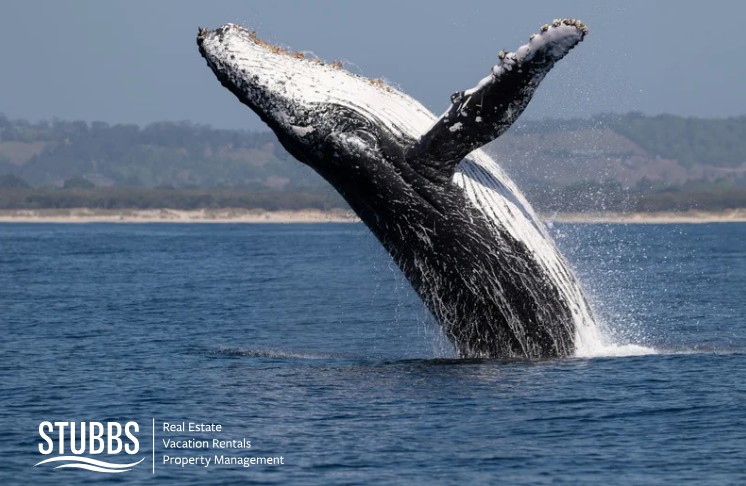
Occasionally, gray whales breach, launching themselves out of the water and crashing down with a thunderous splash. It’s rare but unforgettable, sometimes inspiring nearby whales to join in.
Fun Facts About Gray Whales
- Adults reach 45 feet long and weigh up to 33 tons.
- They live 50–60 years and feed mainly on tiny shrimp‑like crustaceans.
- Gray whales use baleen plates to filter food from ocean sediment.
- They eat about 1.3 tons of food per day during summer feeding season.
- Once nearly extinct, gray whales rebounded after protection laws in 1946, now numbering over 20,000 individuals.
- Their only predators are killer whales and humans.
Whale Watching Tours in San Diego
For an up‑close experience, book a whale‑watching cruise. These tours often include marine naturalists who share insights about migration patterns and ocean wildlife.
Stubbs recommends:
- Flagship Cruises & Events - 990 North Harbor Drive, San Diego
- Oceanside Adventures - 256 Harbor Drive South, Oceanside
Both offer comfortable vessels, expert guides, and unforgettable views of whales, dolphins, and sea lions.